

In a world where teamwork makes the dream work, collaborative education is the secret sauce to unlocking student potential. Imagine classrooms buzzing with creativity, where students don’t just learn from textbooks but from each other. It’s like a group project, but without the last-minute panic and someone forgetting to do their part.
This innovative approach transforms traditional learning into an engaging adventure, empowering students to share ideas and tackle challenges together. It’s not just about mastering subjects; it’s about building communication skills and fostering a sense of community. So, buckle up and get ready to explore how collaborative education is revolutionizing the way we learn—because who knew teamwork could be this much fun?
Understanding Collaborative Education
Collaborative education transforms the learning landscape by emphasizing teamwork and interaction among students. This approach not only enriches knowledge retention but also cultivates essential social skills.
Definition of Collaborative Education
Collaborative education refers to learning that involves joint intellectual effort by students. It incorporates group interactions in which learners work together towards common goals. Students typically engage in projects where they share knowledge and skills, contributing to a collective understanding. This method contrasts with traditional education by prioritizing teamwork over individual competition. Such settings encourage diverse perspectives to shape learning experiences.
Key Principles of Collaborative Education
Key principles underpin collaborative education and drive its effectiveness. First, mutual respect promotes an inclusive environment where all voices are heard. Second, shared responsibility encourages students to contribute equally to their group’s success. Third, open communication fosters transparency and trust among participants. Finally, goal-oriented collaboration focuses the group on achieving specific learning outcomes. These principles create a framework that nurtures teamwork and enhances educational experiences through collaboration.
Benefits of Collaborative Education
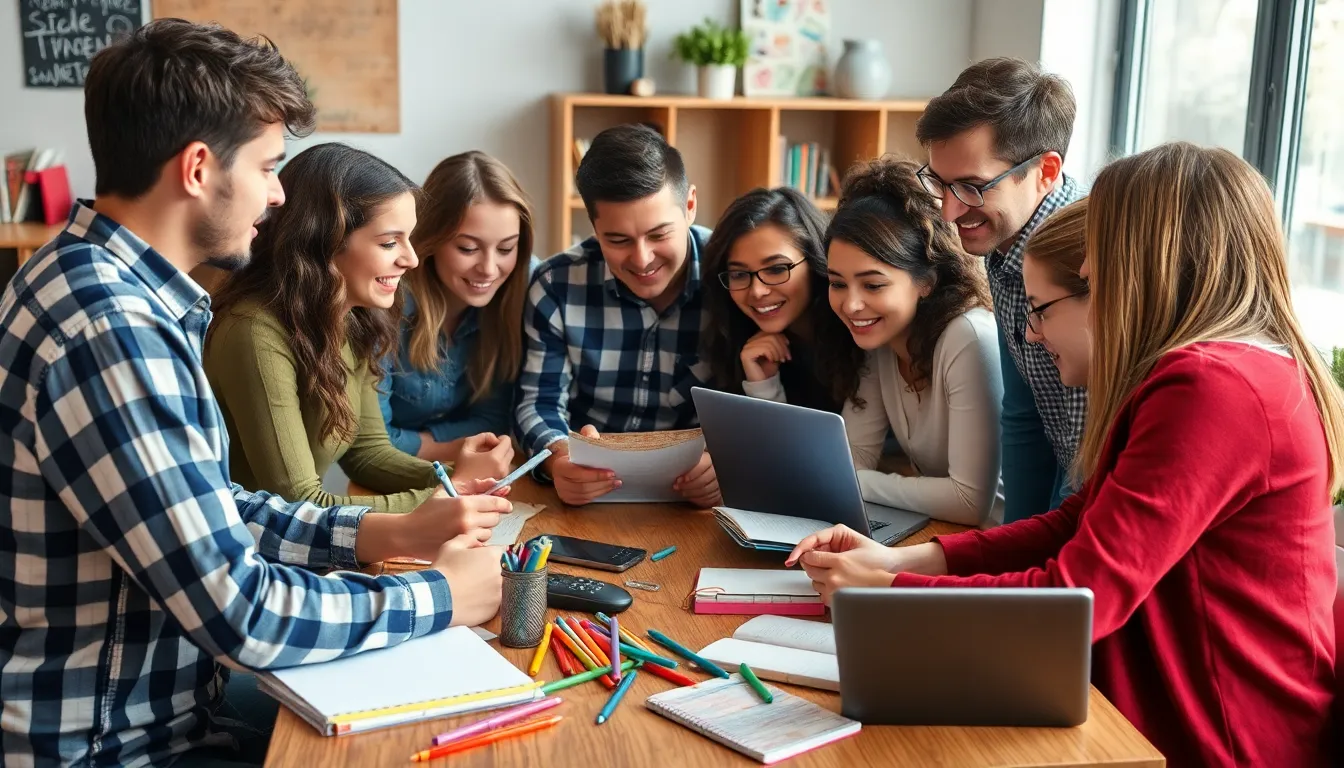
Collaborative education offers several key advantages that enhance the overall learning experience for students. The approach encourages interaction and cooperation among peers, leading to a more engaging and effective educational environment.
Enhanced Learning Experiences
Enhanced learning experiences manifest through cooperative project work and peer-to-peer feedback. Students often grasp complex concepts better when discussing them collaboratively. Evidence shows that shared knowledge leads to deeper understanding and retention. Engaging with diverse perspectives during discussions fosters critical thinking skills. This dynamic ensures that learning becomes more than just memorization and instead a comprehensive process that stimulates curiosity and creativity.
Development of Social Skills
Development of social skills occurs naturally within collaborative settings. Students regularly practice communication and conflict-resolution techniques while working in teams. Collaboration requires active listening, which improves interpersonal relations. Furthermore, working together helps build trust and respect among peers, creating a supportive community. Projects that require joint effort also prepare students for future professional environments where teamwork is essential, enhancing their readiness for real-world challenges.
Models of Collaborative Education
Collaborative education includes several effective models that enhance student learning and engagement. These models foster teamwork and critical thinking within the classroom setting.
Cooperative Learning
Cooperative learning emphasizes small group interactions. Students work together on tasks, share knowledge, and support each other. Each member contributes unique skills, enhancing the learning process. Research shows cooperative learning improves academic performance, promoting higher retention rates. Diverse perspectives combine to solve problems, enabling students to develop social and communication skills critical for future success. Educators implement varied activities, such as group projects or peer teaching sessions, to encourage collaboration in a structured manner. This model empowers students to take ownership of their learning by collectively reaching common objectives.
Problem-Based Learning
Problem-based learning centers on real-world issues that require collaborative problem-solving. Students engage in projects that align with their interests while tackling complex problems. This model encourages exploration, inquiry, and the development of critical thinking skills. Educators facilitate discussions and guide students as they analyze information and generate solutions. By working collaboratively, students learn to value different viewpoints and appreciate the importance of teamwork. Studies indicate this approach cultivates deeper understanding and long-lasting knowledge retention. Practical applications in subjects like science, math, and social studies highlight the relevance of knowledge in real-world contexts, preparing students for future challenges.
Challenges in Implementing Collaborative Education
Collaborative education presents challenges that can hinder its effectiveness. Among these challenges, institutional barriers play a significant role.
Institutional Barriers
Policies and curricula often do not support collaborative education methods. Many educational institutions prioritize standardized testing over teamwork. Limited resources can restrict the implementation of effective collaborative projects. Teacher training programs may lack emphasis on collaborative techniques, leaving educators unprepared. Faculty members might resist changes due to comfort with traditional teaching styles. Given these factors, overcoming institutional constraints is essential for fostering a collaborative environment.
Group Dynamics Issues
Group dynamics can lead to challenges in collaborative education. Conflicts among group members may arise, impacting productivity and morale. Students might face difficulties in balancing individual accountability with group outcomes. Unequal participation often occurs, with some students dominating discussions while others remain disengaged. Differences in communication styles can further complicate interactions. Addressing these dynamics is crucial for maintaining effective collaboration and achieving educational goals.
Best Practices for Effective Collaborative Education
Effective collaborative education requires intentional strategies that streamline teamwork. Prioritizing communication fosters a clear understanding of project goals among students. Assigning specific roles encourages accountability within groups. Monitoring progress allows educators to support teams as they navigate challenges. Regular reflection on the collaborative process enhances students’ ability to identify strengths and areas for improvement.
Engaging diverse perspectives heightens critical thinking, resulting in richer discussions. Emphasizing respect ensures that all voices are heard, making collaboration more effective. Encouraging feedback creates a supportive environment, reinforcing continuous growth.
Strategies for Educators
Implementing cooperative learning techniques increases student engagement. Group projects that emphasize shared responsibility motivate students to contribute equally. Setting clearly defined objectives enables students to stay on track. Utilizing jigsaw activities allows each group member to teach their peers, enhancing understanding of content. Establishing ground rules for collaboration minimizes conflicts and clarifies expectations around participation. Regular check-ins provide opportunities for feedback and adjustments.
Tools and Technologies to Support Collaboration
Technology plays a crucial role in facilitating collaboration among students. Online platforms like Google Workspace allow real-time document editing and easy file sharing. Application tools such as Padlet enable brainstorming sessions that include input from all group members. Video conferencing software fosters communication for remote group work, bridging geographical gaps. Project management tools like Trello help students organize tasks and timelines effectively. Leveraging these technologies enhances collaborative experiences and encourages active engagement in learning.
Collaborative education stands as a powerful method for enriching the learning experience. By fostering teamwork and encouraging diverse perspectives, it not only enhances academic performance but also builds essential social skills. Students learn to communicate effectively and resolve conflicts while developing a sense of community that extends beyond the classroom.
Although challenges exist in implementing collaborative practices, the benefits far outweigh the obstacles. With the right strategies and tools in place, educators can create an inclusive environment that nurtures curiosity and creativity. As educational landscapes evolve, embracing collaborative education will prepare students for the complexities of the modern world, equipping them with the skills needed for future success.